
don't die
on wanting to live forever

mourning pages, no.4
i think i was in high school when i first learned about the fountain of youth. i was watching pirates of the caribbean and was absolutely enthralled by orlando bloom (and subsequently, keira knightley), something about their flowy blouses and kohl eyeliner really did it for me but that is not the point of today’s reflection. sorry!
the fountain of youth was the promise of stasis. in folklore, it is the legendary spring that supposedly restores youth to anyone who drinks from it or bathes in its waters. was this perhaps the first OG wellness trend?
if humans are anything like they are now, we know that the fear of aging and dying is the catalyst for every capitalist trend—aesthetics disguised as lifestyles, bodies slowly becoming systems to collect data. (please free me of the prison of the clean girl!) movies shared a glimpse of promise, that you maybe could live forever – and it felt like magic.
now, we have biohacking!
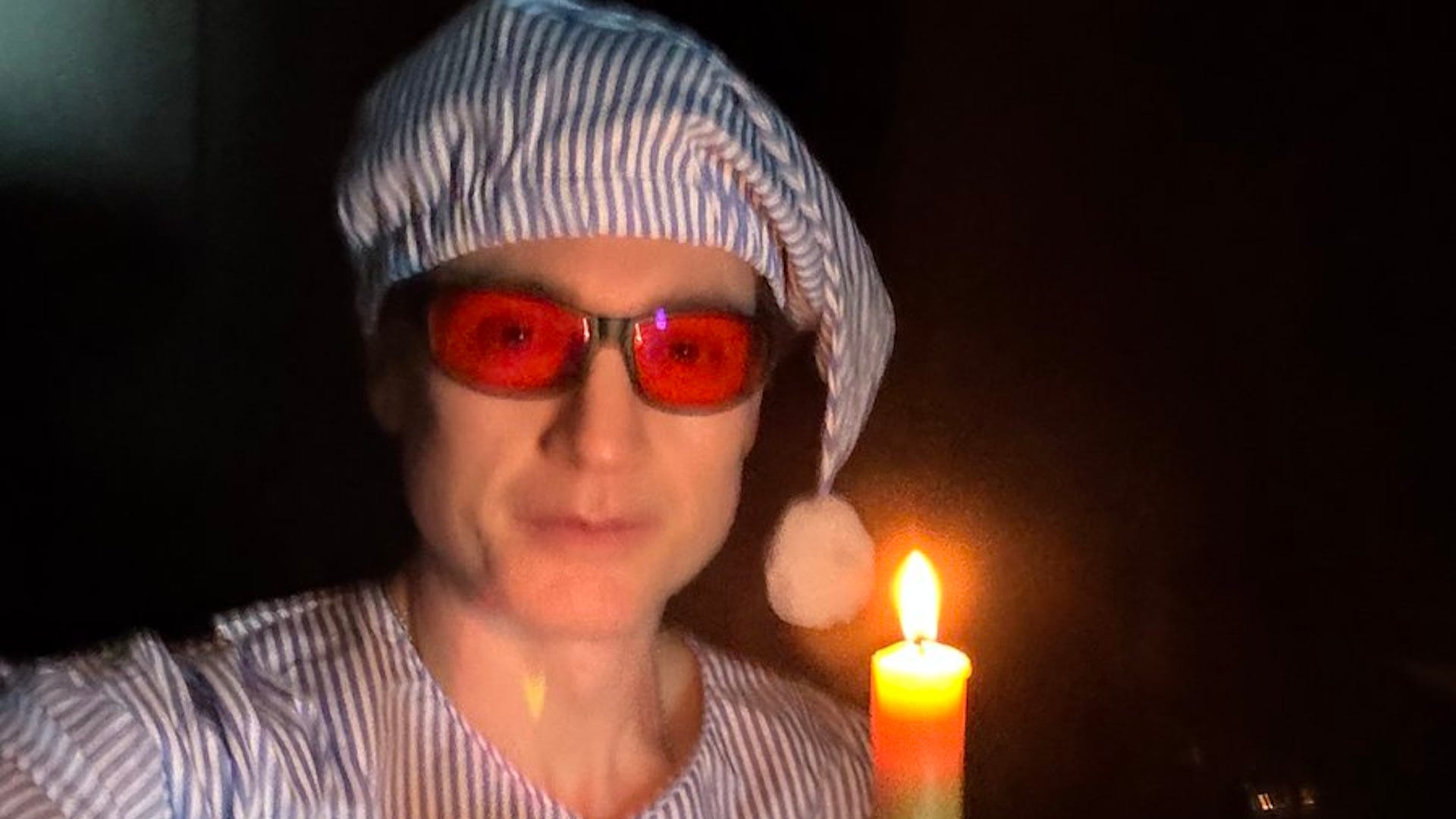
i want to be perfectly clear about what this essay is actually arguing - biohacking unsettles me because it repackages the fear of death as a lifestyle, and in doing so, it mistakes surviving longer for actually living. that distinction has real consequences — for our bodies, our communities and what we decide is worth caring about. i want to understand why we want to live forever, and the ethical questions that arise when we spend our lifetimes quantifying our daily habits in pursuit of self-optimization.
if we are in constant pursuit of living longer… are we really living? sure, you might actually prolong your life by tracking and optimizing everything, but the question remains – does it matter if we’re all going to die eventually? and what does living well look like in this current climate if it is rooted in restriction and strict regimens?
i took it to my personal instagram story to ask my friends and followers (all 1,938 of them!) what they knew about biohacking and bryan johnson, who is apparently the guy to know. other than seeing a few shirtless memes about him and how easy he is to dunk on, i realized i don’t actually know much about what he’s doing, aside from the fact that he wants to be the first person to successfully not die, using protocols designed to help him live forever.
biohacking might feel like a tech upgrade of the fountain of youth but instead of enchanted springs, we have supplements, wearables, coffee enemas and men in compression shirts telling us to optimize our mitochondria. (it is the powerhouse of the cell, after all)
and of course, bryan johnson isn’t operating in a vacuum. he is a prominent figure in a booming industry. the global biohacking market is projected to reach over $216 billion USD by 2030. longevity biotech companies are raising billions in venture capital and every year there’s a new wave of tests, trackers and “don’t die” subscriptions promising to extend your life by a few more optimized minutes. we have got to remember that at the end of this, the industry is a business, and immortality can be bought. and still at the end of it, you will die! woof!!!
how to defy death—an article and podcast for aging up by The Atlantic, hosted by Natalie Brennan and Yasmin Tayag—asks the bigger question: what are we trying to improve? in 2026, everything is political and charged. and while i can understand striving to become our best selves, the question remains—why?
from what i understand – at a foundational level, we need science to understand our bodies and our world. within the longevity space, the core of that is understanding there is a healthcare system that increasingly feels inaccessible. we’re being asked to take our health seriously but there are fewer doctors, longer waits – mandated screenings aren’t required until you’re in your forties, higher rates of chronic illness now due to c*vid. living in bc, our doctor shortage is so prevalent that even when you do finally see a doctor, you’re rushed out and it feels like it’s not holistic.
anecdotally, i have some skin in this game as a woman of colour living with chronic illness in bc. i have paid to play. it helped me. i believe that paying for private care changed something material for me — without it, i think i would have ended up needing surgery, and that felt just as inaccessible as the public system itself. but i also felt guilty about it. i felt shame. i noticed the disparity when talking about it with friends who couldn’t afford to make the same choice. and here’s the thing i keep coming back to - my relief wasn’t proof that the system works. it was proof that the system had already failed me, and that i was privileged enough to have a lifeboat. gratitude for a lifeboat isn’t the same as endorsing the conditions that sank the ship.
and that begs the question: if you’re a health-conscious thirty-something with questions, data literacy and the means to pay, it’s hard not to ask why wouldn’t i just do this myself? when we experience a lack of resourcing within collective care systems, it is understandable why people would start to use self-experimentation and own that responsibility.
yet this is the contradiction at the heart of the longevity and optimization movement. the more we privatize care, the more health becomes an individual project rather than a shared system. Timothy Caulfield, a Professor of Law at the University of Alberta who was featured in The Atlantic podcast, warns that this framing subtly shifts responsibility away from governments and communities and onto the individual — and that if you’re not optimizing, you’re failing. the pressure to improve becomes a marketing tool, and your health anxiety is the hammer, babes.
this exposes a deeper ethical tension because what starts as a very rational response to scarcity of resources risks setting us further apart, as a collective. people who can afford early access, testing and personalized interventions get further ahead while others — who are usually already disenfranchised: immigrants, migrant workers, people of colour, disabled folks — are asked to wait until they qualify by age or crisis.
are we really gaining agency or are we accepting a system where health is something you earn rather than something you’re owed?
*
it is worth pausing on who is actually funding and leading the longevity movement. the most prominent figures — bryan johnson, peter thiel, jeff bezos — are overwhelmingly wealthy, white and male (surprise!). when the people with the most resources decide that death is a problem to be solved, they are making a decision about where genius and capital flow. and it is not toward the communities who are dying early from poverty, poor air quality, lack of housing or medical neglect. the longevity movement, at its most extreme, isn’t about extending human life. it’s about extending certain human lives. it’s important to name that.
it also raises the question of who even gets to imagine living forever. immortality is a luxury fantasy. for marginalized peoples and communities, the question has never been how do i live forever? but how do i live safely, now? the criticism comes from this paradox — some people are chasing eternal life while others are still fighting for basic longevity. it’s dystopian because it’s true.
and there’s something worth sitting with - what does it do to a society when its most powerful members begin to opt out of the one experience that has always been universal? death has historically been the great equalizer. it is imperfect, unfair in its timing and ultimately non-negotiable for everyone. if that changes, even partially, the social contract shifts in ways we don’t fully have language for yet.
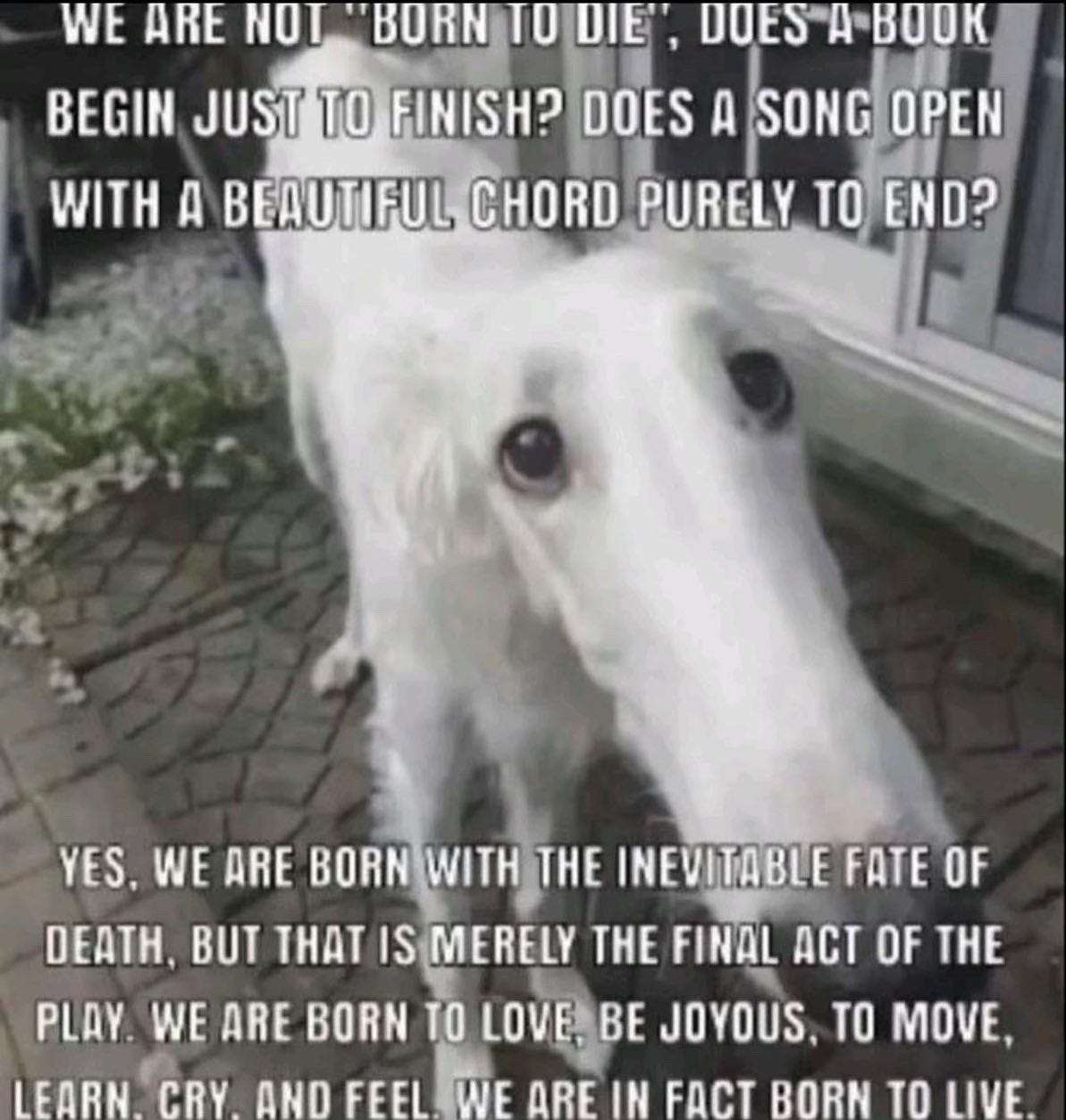
beyond the measurable parts of self-optimization and the analytics of it all, i don’t think i actually want to live forever. and it is one less thing that i want to be marketable about myself. i won’t put a number on it, but having an endpoint is part of what gives life its charge. i personally love a deadline. it makes me feel like i’m really committing to something.
i’ve been thinking about what it actually means to live well, and i keep coming back to the same answer. presence. that doesn’t include data or optimization or a wearable telling me my HRV score at 2am. presence to me feels like the specific texture of a life being lived — sitting on a patio with a flavoured cigarette, my friends loud around me, my lover nearby, my tiny brown dog probably eating something he shouldn’t. throw in a wrinkle or two. i’m living, baby!!
there is a real argument that accepting death — not passively, but actively, as a fact you’ve made peace with — is what allows you to actually show up for your life. the endpoint isn’t the enemy. the endpoint is the reason any of it matters. and i think there is something quietly radical, in this current moment, about refusing to treat your body as a problem to be solved and instead just living in it. aging included.
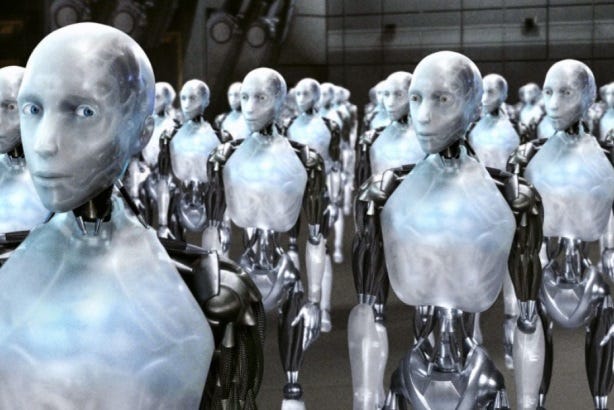
the secret to living well and longer isn’t hidden in a stack of metrics (sure, it can be) but the secret really has always been in the sauce. take care of yourself, eat well, move your body, touch grass, be a good person. do we really need to quantify how stressed we are in order to feel less stressed? for some people, sure. but the “don’t die” ethos turns the body into a UX problem, a system to be engineered and eventually a problem to be solved. we’re not machines.
again - i am not anti-longevity. i’ve adopted parts of it myself. i want to feel well. i want good skin. i’m trialing a whoop! i get botox… i’m not above vanity!!!! wellness rooted in love of living is a different project than wellness rooted in fear of death — and i think the longevity movement, at its loudest, is doing the latter while selling it as the former. but i am going to vehemently refuse to put coffee up my butt.
so to circle back - what does biohacking have to do with how we die? it exposes a contradiction within the movement. there is an active effort to out-engineer something that is universally guaranteed. it feels like a promise no one can keep. and somewhere between the fountain of youth and the compression shirt, we are still just human beings trying to figure out how to be here now — for as long as we can.
more on this and what i referenced above
a podcast: Conspirituality — on wellness myths and trends. a great entry point — Mallory is the OG coffee enema debunker and she is also my friend.
another podcast: How to Defy Death — The Atlantic. the one i reference in the essay.
a novel: All Men Are Mortal by Simone de Beauvoir — a classic exploration of immortality as a curse, not a gift.
a movie: Don’t Die: The Man Who Wants to Live Forever — Netflix. worth watching before forming an opinion.
funnily enough, just yesterday i dusted off my copy of the film The Fountain to rewatch soon - i'll be thinking of you as i do ;^P
i hadn't heard of Bryan Johnson, but am all too familiar with the rise of transhumanism and we're definitely overdue for a broader, deeper consideration of where that path seeks to take the world... and what life & death even mean from that vantage point
Never have never will